
Good training tools are useless without intention behind them. Every piece of equipment in Harbor's cages was selected because it develops a specific quality — barrel control, bat speed, contact feel, timing, or movement mechanics. None of it is there to fill space. Here's what each tool does and when it gets used.
Every swing and pitch at Harbor generates real data. These four tools are what turn reps into information — so coaches and athletes make adjustments during the session, not the following week.
Full batted ball simulation on every swing. HitTrax tracks exit velocity, launch angle, direction, and distance — and projects each ball on a virtual field so athletes see exactly where it would land in a game.
Dual cameras + radar track every pitch and deliver real-time metrics on spin, shape, and release — so pitch design is built on data, not feel. Available in hitting and pitching configurations.
Trackman's radar tracking captures both the pitch and the swing in one system — pitchers get velocity, spin, and movement data, hitters get exit velocity, launch angle, and distance, all from the same unit.
ArmCare programming builds arm health and resilience into every training block. Workload monitoring, recovery protocols, and strength benchmarks keep pitchers throwing more and getting hurt less.
Accurate velocity reads available at every station. Pocket Radar gives coaches and athletes instant feedback on arm strength, bat speed, and pitch velocity without requiring a full tech setup.
Five machines across hitting and fielding — each designed for a specific use case. Programmable pitch delivery for hitters, softball-specific machines for softball athletes, and ground ball machines for fielders.
Harbor runs 5 Hack Attack machines across the cage lanes. The Hack Attack delivers accurate, repeatable pitch delivery across fastballs, curveballs, sliders, and changeups at any speed and location combination. The standard for serious hitting rep work.
Purpose-built for softball athletes. The Bata delivers consistent pitch delivery for softball hitters working on timing, bat path, and pitch recognition — at the speed and arc that matches game conditions for fastpitch and slowpitch players alike.
The JUGS Lite Flite fires soft, lite-flite balls at game speeds — ideal for high-rep sessions, younger athletes building timing, and close-range drill work where a hard ball would be a safety concern. Great for getting volume in without wear on the arm or equipment. Throws curve balls and sliders as well!
Fires smaller-than-regulation balls to sharpen hand-eye coordination and pitch recognition. Because the ball is smaller, hitters have to pick it up earlier and stay on it longer — training the visual tracking habits that carry directly into game at-bats.
Fires consistent ground balls for infield and outfield defensive reps on the turf. Lets coaches run high-volume ground ball rounds — backhands, slow rollers, hard shots — without arm fatigue, so fielders get more quality reps in every session.
Specialty bats that isolate specific qualities of the swing — power, speed, extension, and precision — that a standard game bat can't train in isolation.
Tater 1 hand bats and split grip bats are designed for developing proper bat path and barrel control.
Purpose-built for bat speed training. The Pro Velocity bat is engineered to develop fast-twitch muscle activation and teach the body to move at higher velocities through the zone. Used in combination with standard bat work for a complete speed and power program.
Heavier than a game bat, the overload bat builds rotational strength through resistance. Regular overload work increases the force a hitter can generate through the zone — the foundation of exit velocity improvement.
Lighter than a game bat, the underload bat trains fast-twitch muscle activation and teaches the body to move at speeds above what a standard bat allows. Used in combination with overload work for a complete bat speed program.
The flexible shaft eliminates the ability to cast the hands or roll over early — the bat only works if the hitter drives through the ball with proper extension. Builds feel for staying through the zone and teaches the hands to lead the barrel.
Dramatically reduced sweet spot forces the hitter to find the barrel with precision on every swing. Eliminates lazy contact and trains the muscle memory needed to consistently square the ball at the point of contact.
Different balls for different purposes — the right ball for the right drill determines how much the athlete gets out of each rep.
Standard game-spec leather baseballs for live at-bat simulation, advanced machine sessions, and game-prep work. Nothing replicates game conditions like a real baseball — used at Harbor when the session calls for authentic contact feel.
Heavier than a standard baseball, weighted hitting balls create immediate feedback on contact quality. A mis-hit feels wrong and a squared ball feels right — training the hands and barrel to find the right path without relying on visual data alone.
Soft construction makes foam balls safe for high velocity work, and high-rep drill work where volume matters more than live ball feel.
The structures and aids that build a complete cage setup — controlling the environment so athletes can focus entirely on the work.
Height and position-adjustable tees allow hitters to isolate any contact point in the zone — inside, outside, up, down. Tee work is the most controlled rep in hitting: no timing, no pitch variation, nothing but the hitter and the mechanics. The baseline for every Harbor hitting session.
Accurate velocity reads on every pitch and swing, available at every station. Pocket Radar gives coaches and athletes immediate feedback on arm strength, bat speed, and exit velocity without requiring a full tech setup.
Used before and during sessions for hip activation, shoulder care, and rotational resistance training. Bands load the hips and posterior chain before live swings and are a standard tool in ArmCare protocols for pitchers after each bullpen session.
Harbor is more than a pitching lab — every area of the facility is built with the same level of technology and coaching intentionality. Explore what else is available.
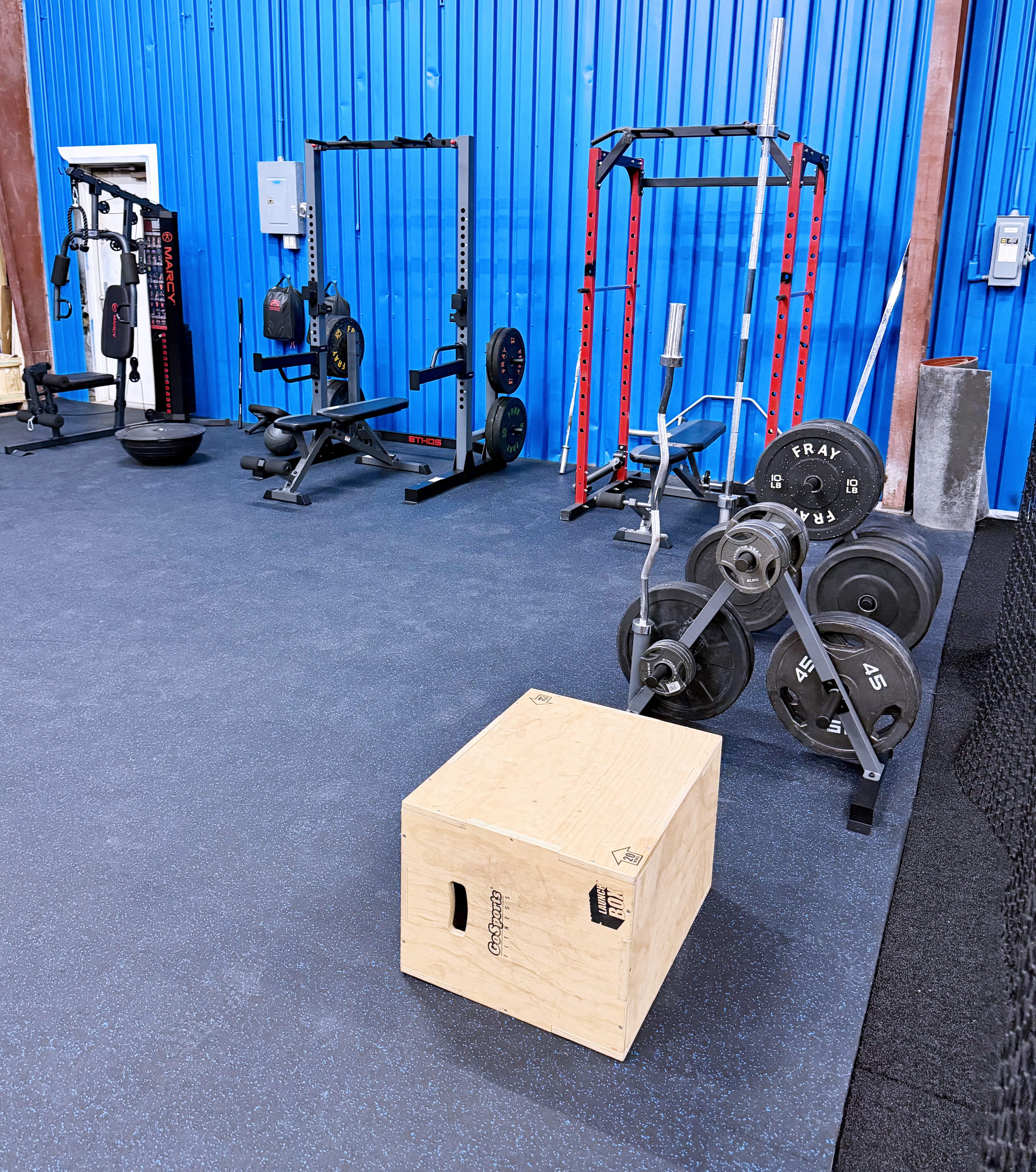
Athletic Performance · Movement Training
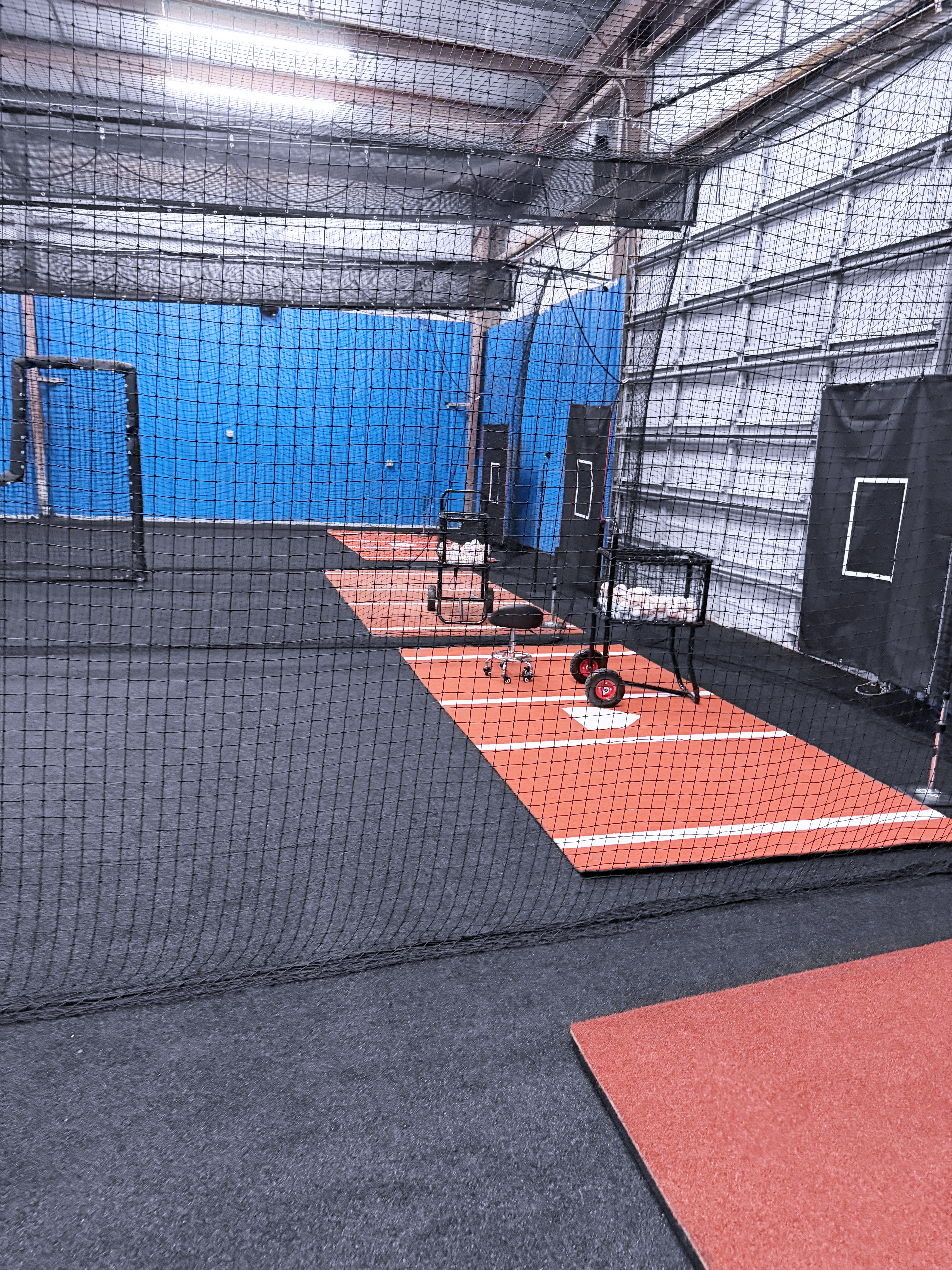
Compression · Cold Therapy · Film Review
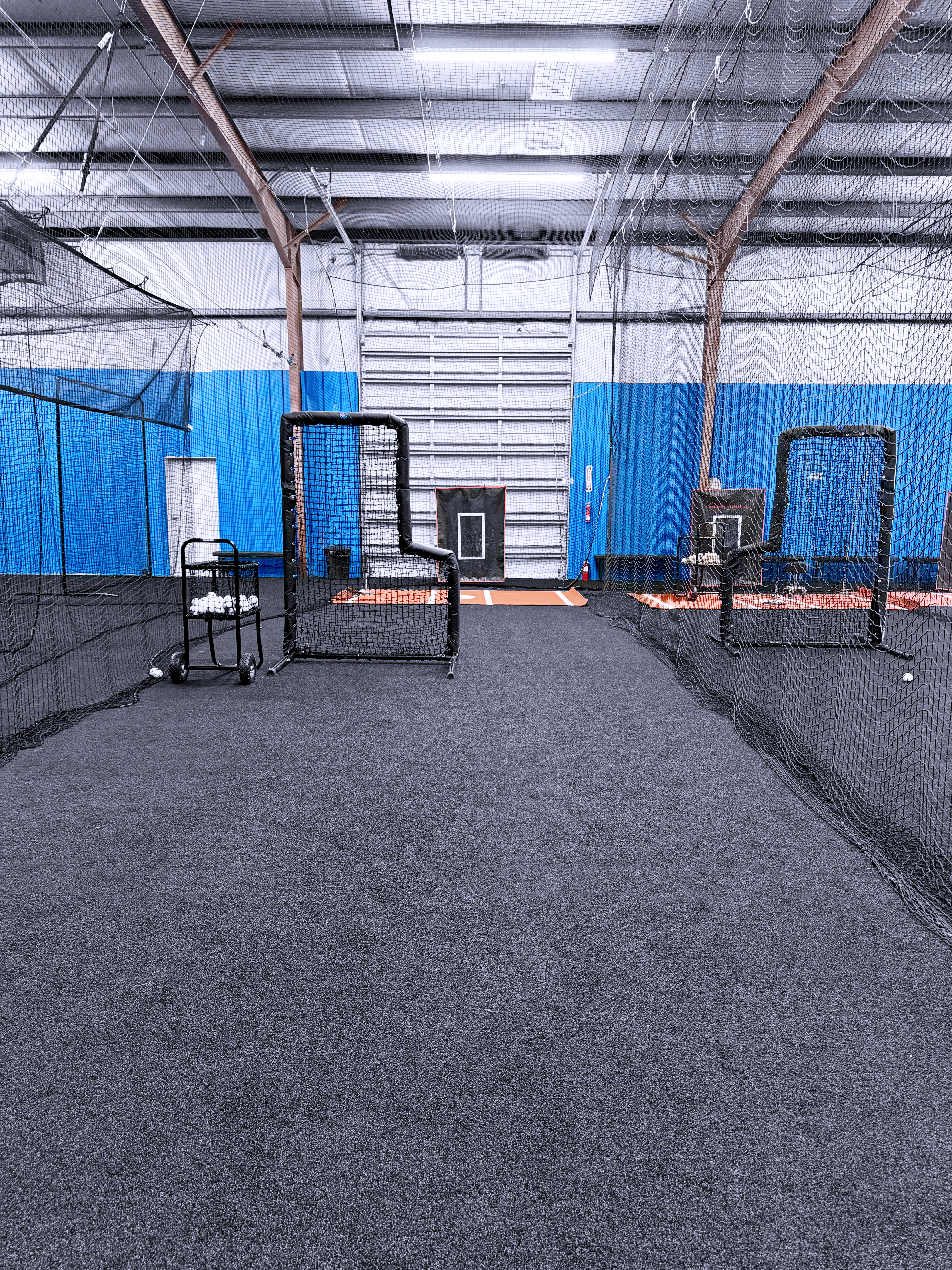
5 Lanes · Hack Attack · Rapsodo Hitting